
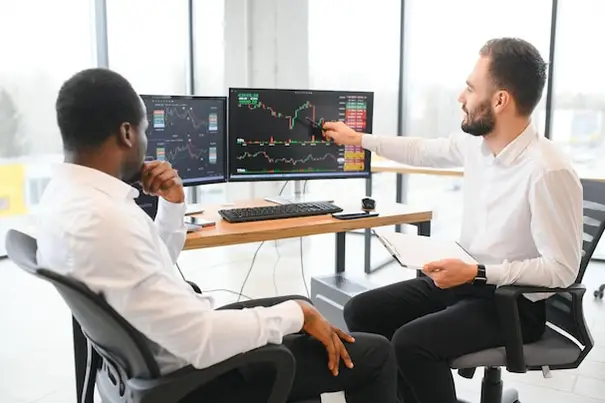
Trading can look simple from the outside: find a setup, enter a trade, and hopefully make money.
But once you actually sit in front of the charts, you quickly realize that trading involves much more than clicking buy or sell. It requires preparation, patience, risk management, discipline, and the ability to make decisions when emotions are involved.
At Trade with Dana, I believe new traders often need more than another strategy. Sometimes you need someone to help you slow down, look at what you are doing, and identify the habits that may be getting in your way.
Here are five common mistakes new traders make and some practical ways to work through them.
Mistake 1: Trading Without a Clear Plan
One of the easiest mistakes to make is entering a trade simply because the market is moving.
You see price take off, you feel like you are about to miss the move, and suddenly you are in a position without really knowing why.
Before entering a trade, you should be able to answer a few basic questions:
Why am I entering this trade?
Where is my entry?
Where will I exit if I am wrong?
Where might I take profit?
How much am I willing to risk?
What would tell me that this trade idea is no longer valid?
Without a plan, trading can quickly become emotional and reactive.
How to Avoid It
Create a simple trading plan before you enter.
Identify your setup, entry criteria, risk, exit strategy, and the market conditions you want to see.
Your plan does not have to be complicated. In fact, simpler is often better.
The goal is to know why you are taking the trade before your money is involved.
Mistake 2: Risking Too Much on One Trade
New traders naturally focus on how much they can make.
But learning how to protect your trading capital is just as important.
Oversized positions can create unnecessary pressure. When too much money is at risk, even a normal market pullback can suddenly feel terrifying.
That pressure can lead to moving stops, exiting too early, revenge trading, or making another impulsive decision.
How to Avoid It
Decide your maximum risk before entering the trade.
Use appropriate position sizing.
Know where your stop will be.
Never risk money you cannot afford to lose.
And remember: you do not have to make your entire week in one trade.
Consistency matters more than trying to hit a home run every time.
Mistake 3: Letting Emotions Take Over
Trading can bring out emotions you did not even know you had.
Fear.
Greed.
Frustration.
Excitement.
Overconfidence.
And one of the biggest ones: the desire to immediately make your money back after a loss.
That is where revenge trading can begin.
I have learned that one of the hardest parts of trading is not necessarily reading the chart. It is learning to manage yourself while you are reading the chart.
How to Avoid It
Have rules for yourself before the trading day begins.
Know when you will stop.
Know your maximum loss.
Know your preferred setups.
And if you notice yourself becoming emotional, frustrated, or impulsive, sometimes the smartest trading decision is to step away from the screen.
You do not have to remove emotion completely.
The goal is to prevent emotion from making the decision for you.
Mistake 4: Expecting Quick Results
Trading is often marketed as though someone can learn a strategy over the weekend and immediately start generating consistent income.
For most people, it does not work that way.
Trading is a skill.
And like most skills, it takes time, repetition, mistakes, review, and experience.
One of the biggest traps for new traders is constantly switching strategies because the current one did not work immediately.
They move from indicator to indicator, mentor to mentor, and strategy to strategy without spending enough time learning how one approach actually behaves in different market conditions.
How to Avoid It
Give yourself permission to learn.
Study market behavior.
Practice your strategy.
Review your trades.
Learn why a trade worked — and why another one did not.
The goal is not to find a magical strategy.
The goal is to become a better decision-maker.
Mistake 5: Overtrading
Sometimes traders take trades because there is a good setup.
Other times, they take trades because they are sitting in front of the computer and feel like they should be doing something.
That is a big difference.
Overtrading can happen because of boredom, frustration, FOMO, or an attempt to recover losses.
But more trades do not automatically equal more profit.
Sometimes more trades simply create more opportunities to make mistakes.
How to Avoid It
Focus on quality rather than quantity.
Wait for the setups that actually match your trading plan.
You do not have to catch every move.
You do not have to trade every session.
And you definitely do not have to chase a market that already moved without you.
Learning when not to trade is part of becoming a trader too.
Why Trading Psychology Matters
You can give two people the exact same strategy and still get two completely different results.
Why?
Because execution matters.
Patience matters.
Discipline matters.
Risk management matters.
And the decisions you make under pressure matter.
That is one reason I created Trade with Dana.
Sometimes a trader does not need another crowded Discord room or another complicated strategy.
Sometimes you need someone to look at your screen with you, listen to how you are thinking through your trades, and help you identify where your execution may be breaking down.
Build Better Trading Habits
One of the best things a developing trader can do is create a routine.
Keep a trading journal.
Write down why you entered the trade, what you saw, what happened, and what you learned.
Review your trades regularly.
Look for patterns.
Are you entering too early?
Are you chasing price?
Are you moving your stops?
Are you trading when you are tired, frustrated, or distracted?
Are your best trades happening around the same setups or market conditions?
Those observations can teach you a lot.
Most importantly, focus on your process, not just your daily profit and loss.
One winning trade does not automatically mean you traded well.
One losing trade does not automatically mean you traded poorly.
Ask yourself:
Did I follow my plan?
That question can sometimes tell you more than the dollar amount on the screen.
How Coaching Can Help
These are all things we can discuss during your coaching session to help ensure that, as a new trader, you keep these principles at the forefront of your mind and develop a clear plan to avoid these common mistakes.
During our 1:1 session, we can look at your trading habits, execution, risk management, decision-making, and the areas where you may need more structure or accountability.
The goal is not to tell you exactly what to trade or promise you a particular outcome.
The goal is to help you become more aware of your own process, identify where mistakes may be occurring, and develop a more structured approach to your trading.
Final Thoughts
Most new traders do not struggle because there are not enough opportunities in the market.
They struggle because trading requires structure, patience, discipline, risk management, and experience.
Those skills take time to develop.
At Trade with Dana, I do not promise overnight success, guaranteed profits, or millionaire results.
I offer personalized 1:1 boutique trading coaching designed to help developing traders look more closely at their own execution, trading habits, risk management, and decision-making.
If you are tired of feeling lost in large trading communities and would rather have someone sit down with you one-on-one, share your screen, and work through what you are actually seeing in the market, that is exactly what Trade with Dana was created for.
Trading involves substantial risk and is not suitable for everyone. Trade with Dana provides educational coaching based on personal market interpretation and experience. Coaching does not constitute financial advice, investment advice, or a guarantee of trading results.